

Swedish Stockings
Redefining sustainable hosiery

For a decade, Linn Frisinger has led a quiet revolution in hosiery, transforming Swedish Stockings from a reaction to disposable fashion into a global standard for sustainable luxury.
Now, with the launch of the AW26 collection and a refreshed brand identity, the focus shifts: legwear is no longer an afterthought, but a central, intentional design piece. In this conversation, Linn Frisinger reflects on ten years of progress, the honest complexities of circularity, and why the future of fashion lies in evolution rather than perfection.
Interview Nicole Gavrilles
Images courtesy of Swedish Stockings

Before Swedish Stockings became a global name in sustainable fashion, you were navigating a very different landscape. Could you take us back to the beginning and share a bit about your background and the specific moment or realization that compelled you to leave the traditional path and build a company dedicated to reimagining hosiery?
I have no background in fashion. Before starting Swedish Stockings, I competed in show jumping, and that discipline, resilience, and competitive drive have carried straight over into running a company. There are actually many similarities. I also grew up in an entrepreneurial family, so the idea of building something of my own was always there. The real turning point came after watching the documentary The Light Bulb Conspiracy. It opened my eyes to planned obsolescence, and I realized just how unsustainable hosiery was - a product made from plastic, often worn only once or twice before being thrown away. It felt like both a huge gap and a challenge I wanted to take on.
When you first started Swedish Stockings a decade ago, you called tights the "plastic straws of the fashion industry." Now, looking at the landscape today, do you feel the industry has finally started to listen, or is there still a fundamental misunderstanding about the scale of waste in hosiery?
Our vision from day one has been to change and influence the entire fashion industry. Today, it feels like we're actually on our way there. Over the years we've built real expertise in producing high-quality, more sustainable hosiery, and many brands have approached us for help. That's why we started a production company that now helps other brands produce better tights, fully in line with our original vision of driving change across the industry. Sustainability is no longer a niche topic, it's an expectation. More people are talking about circularity and materials than they ever were ten years ago. But the actual scale of waste in hosiery is still underestimated. Because tights are small and relatively inexpensive, they're often overlooked in the sustainability conversation, yet billions are discarded every year after only a few wears. So I'd say there is still a long way to go.
The new AW26 collection arrives alongside a refreshed brand look. You’ve described this as a shift from viewing legwear as an afterthought to treating it as a central, considered piece of the wardrobe. What prompted this philosophical pivot now, after ten years of building the brand?
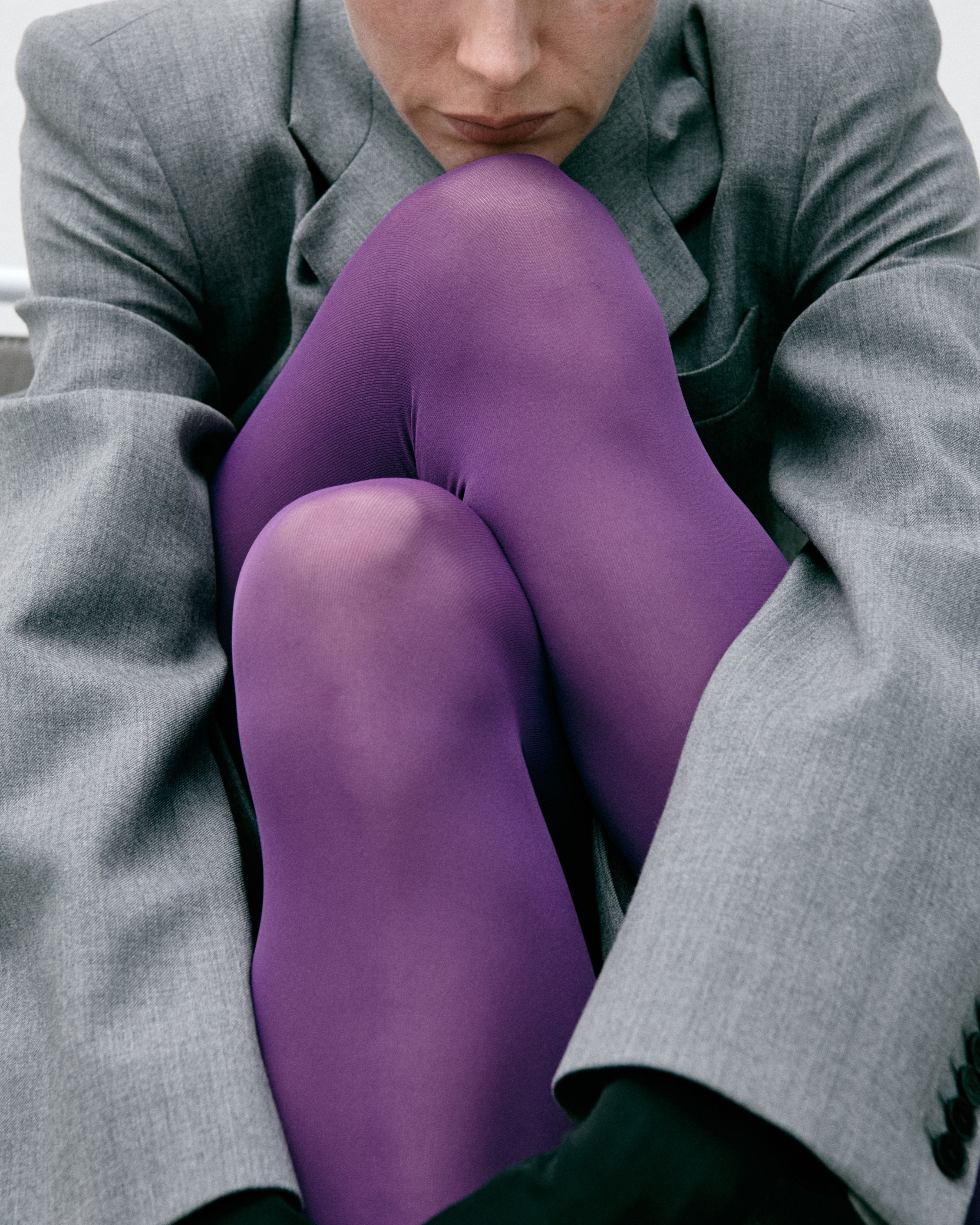
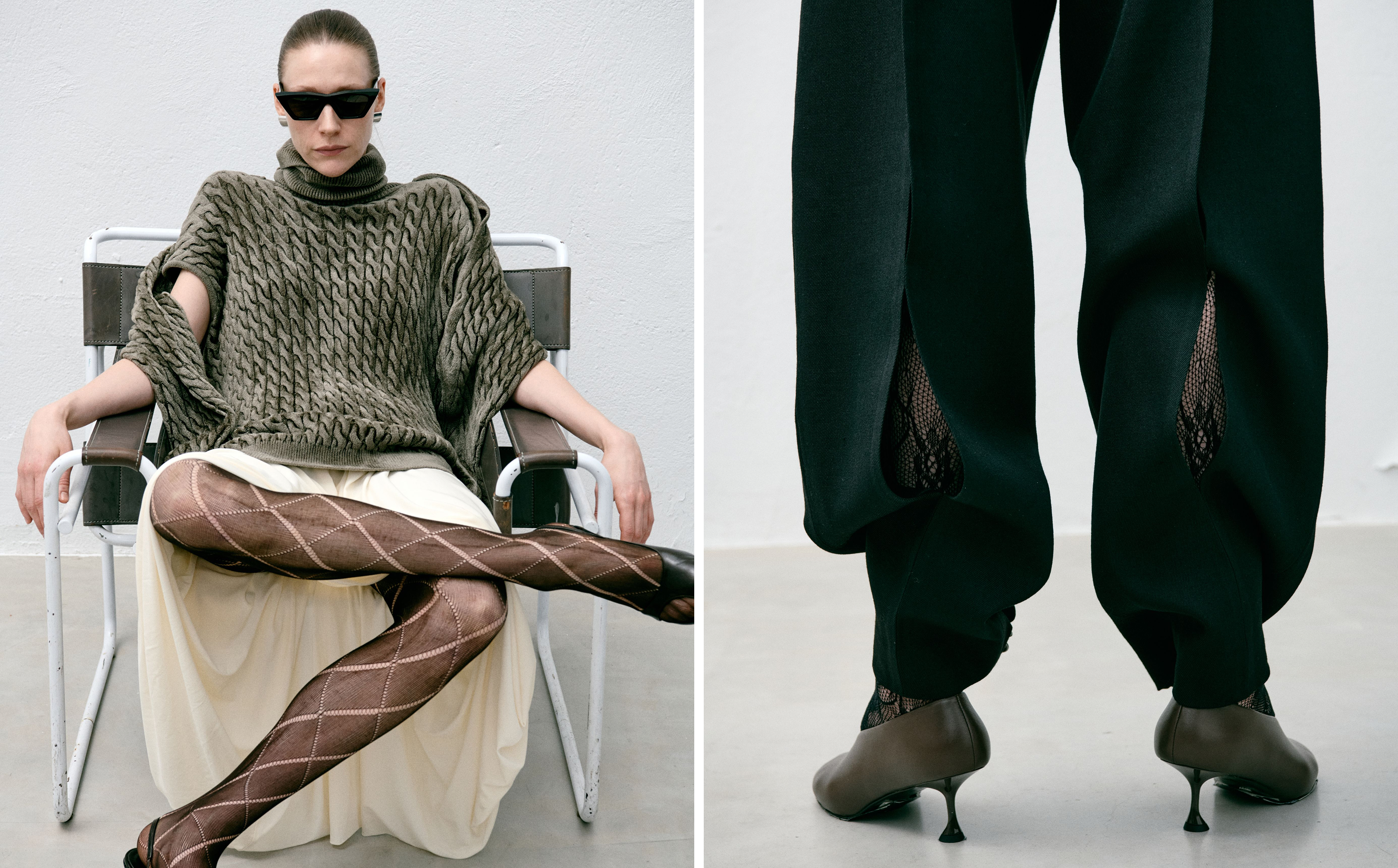
The AW26 refresh reflects where the brand is today. Just like a person, a brand evolves over time. When we started, the fight was about proving that sustainable tights could exist and perform just as well as conventional ones. Ten years later, we've earned our place as a fashion accessory rather than a hidden basic. Naturally, the aesthetics have evolved too. Today, the conversation is no longer about whether sustainable tights are possible. It's about treating legwear with the same intention as any other part of your wardrobe. Tights should set the tone for an outfit, not be treated as an afterthought.
Your 2025 sustainability report is remarkably transparent, celebrating a 68% reduction in carbon emissions while openly admitting where targets were missed, particularly with the Recycling Club. Why was it important to you to highlight the shortcomings alongside the successes in this specific report?
Our goals were never set with the expectation that we'd achieve every single one of them. Ambitious goals are meant to stretch you. For us, transparency isn't about celebrating success. It's about honestly showing where we've fallen short and using those gaps to identify the next opportunity, whether that's internally or through collaboration. Take the Recycling Club. We haven't reached the scale we want on our own, but that's the kind of challenge that could accelerate with the right partnership. If we joined forces with a larger brand, for example, we could make a much bigger impact much faster than trying to do it alone.
“
Instead of creating more products, we’re creating more possibilities with the pieces you already own. The goal isn’t to encourage more consumption - it’s to inspire more creativity.
”

You mention in the report that there is a "real gap" between customer expectations on sustainability and the current reality of materials like elastane. How do you navigate that tension without losing the trust of the conscious consumer who wants perfection?
Elastane is still a technical necessity for the fit and performance of hosiery, and pretending otherwise would simply be greenwashing. Instead of overselling perfection, we tell customers exactly where we are, what the remaining challenges are, and what we're doing to solve them. I believe that honesty builds far more trust than pretending we've already found all the answers.
Fashion moves at a breakneck speed, yet you’ve resisted the pull toward faster cycles. How do you define "evolution" for Swedish Stockings when the industry equates newness with progress?
We do release new collections, so in that sense we’re not completely different from other fashion brands. But we keep the newness relatively limited, produce in smaller quantities, and treat new collections as the icing on the cake rather than the main focus. Our core collection, especially our black tights, remains the foundation of the business. Instead of constantly chasing novelty, we focus on improving the products people already love.
I think that’s why our bestseller, Olivia, was named the world’s best tights by The New York Times. We invested in perfecting it rather than replacing it with something new.

The report notes that all polyamide used is now recycled, yet elastane remains a hurdle. Can you walk us through the intentionality behind your material choices today, and where you hope to be when technology catches up to your vision?
Our starting point is always the same - what's the most responsible material choice that still delivers the best quality, fit, and durability. That's why we fully transitioned to recycled polyamide once the technology was mature enough to do so without compromising performance. Elastane is our next frontier. Recycled and bio-based alternatives exist, but they're not yet at the performance or scale we need. We're actively testing new innovations, and the moment the technology meets our standards, we'll adopt it. Ultimately, we want to create a fully circular product without compromising quality.
With 8 billion pairs of tights discarded annually, the wear-and-tear nature of the category is undeniable. How does designing for longevity change the way you approach color, fit, and texture in the new collection compared to when you started?
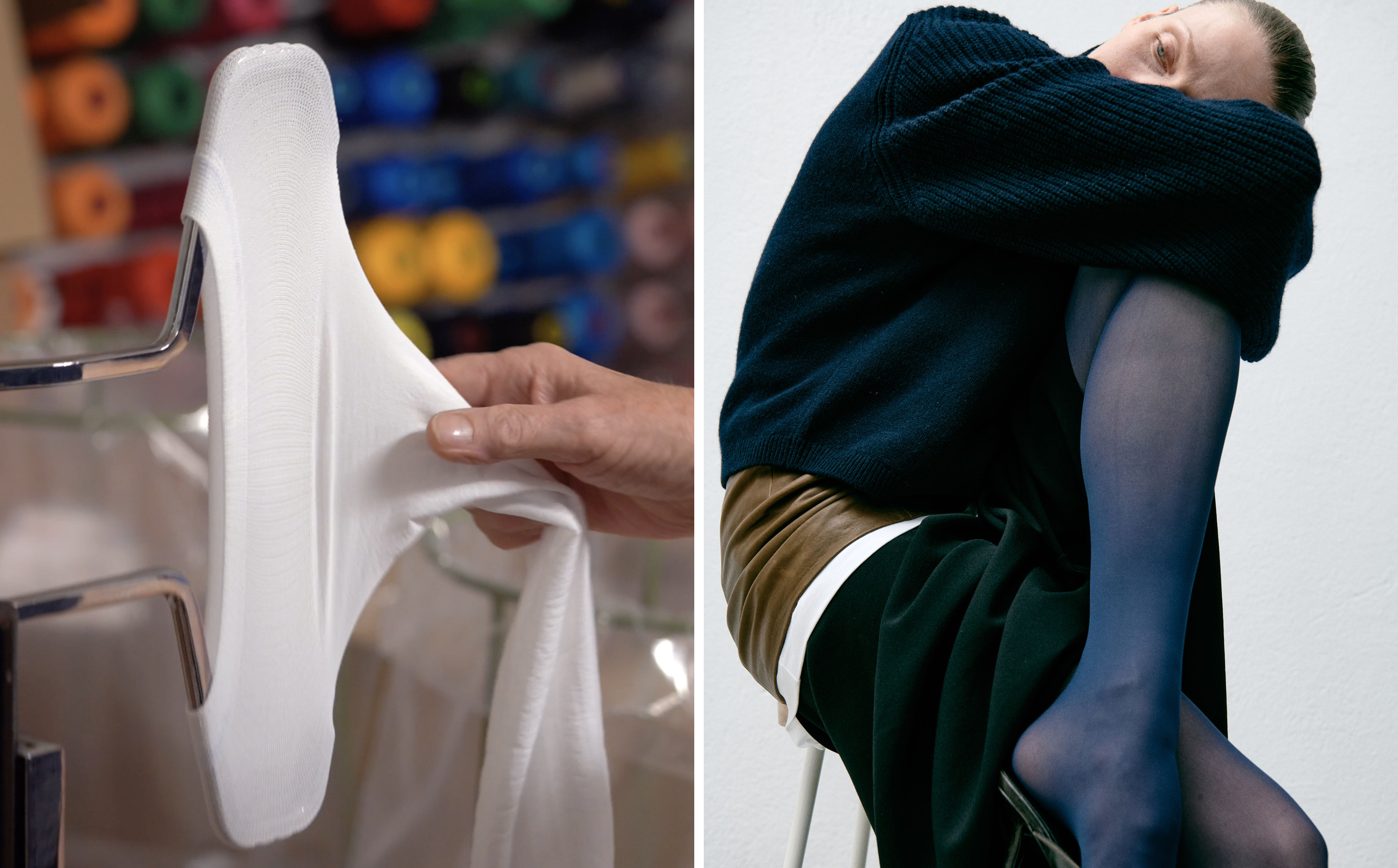
The simple answer is quality. Our core question is always: How do we produce a pair of tights under the most responsible conditions possible that also lasts as long as possible? That starts with our factories. Everything is produced in Italy, where we have the best traceability across the entire supply chain. All the water used is purified and reused, our production operates as zero waste, and we work with seven specialist factories depending on what's needed for the highest quality. We stay very close to all of them so we're first in line when new innovations emerge - we actually have an exciting project in the pipeline right now. That same mindset shapes every design decision. Early on, we just wanted to prove a sustainable tight could exist. Today, every choice, from the yarn and denier to the fit and design is made with longevity in mind.
You’ve built this brand on the conviction that sustainability and design aren’t separate pursuits. In the AW26 collection, where do you see that marriage most clearly? Is there a specific piece that embodies this unity for you?
I like the new sets we've introduced, where the tights and top are knitted on the same machines, and designed to be worn together. I love the idea that one set can be styled in so many different ways. You can wear the tights with a dress, the top with denim, or combine them as a complete look. Instead of creating more products, we're creating more possibilities with the pieces you already own. The goal isn't to encourage more consumption - it's to inspire more creativity.
The new brand look feels like a maturation of your original mission. If the first decade was about proving sustainable hosiery was possible, what is the core message you want the next decade to convey to women wearing your products?
I like to think of Swedish Stockings as a woman who can be dancing on a bar at night and at the same time be a brain surgeon the next morning. I think the most interesting brands - and people - hold those contradictions. They combine intelligence and beauty. If our first decade was about proving sustainable hosiery could exist, the next decade is about proving that responsibility and desirability belong together. I also want women to realise just how much a single pair of tights can transform a wardrobe. You don't need to buy a new dress to create a new look. Simply changing your tights can completely reinvent an outfit. That's a more sustainable way of consuming fashion.
“
For us, transparency isn't about celebrating success. It's about honestly showing where we've fallen short and using those gaps to identify the next opportunity.
”
You’ve been candid about the challenges of recycling mixed materials. What does "intention" look like to you in legwear today, specifically when the perfect circular solution doesn’t yet exist?
For me, intention is about acting instead of waiting for the perfect solution. We can't recycle old tights back into new tights at scale. That technology isn't there yet. But instead of allowing them to end up in landfill, where they eventually break down into microplastics, we've found another way - we turn them into furniture. It's not the final solution. But it gives the material a much longer second life while we continue working towards circularity. That's what intention means to me: not perfection, but making the best possible decision with the solutions available today.
As you launch this new chapter, how do you hope the conversation around hosiery shifts? Is it less about the product itself and more about the mindset of the woman wearing it?
I hope the conversation shifts from tights being an afterthought to becoming a powerful styling tool for women. That the conversation shifts from buying more to styling better. We often think we need something new to create a new look, when in reality, changing your tights can completely transform an outfit. The same dress can feel elegant, playful, bold, or understated simply by changing the legwear. There's also an economic perspective. Paying a little more for a pair that lasts means wearing them dozens of times instead of just a handful. In the long run, that's smarter spending. I hope the conversation shifts from tights being a disposable product to a mindset focused on styling smarter, buying less, and choosing quality over quantity.
Looking back at that initial moment of realization regarding planned obsolescence in pantyhose, what is the one thing you wish you knew then that you know now about changing an entire industry from the ground up?
Our ambition has always been bigger than building a successful brand. It’s about changing as many of those eight billion pairs of tights as possible into better ones. Looking back, I think I would have started collaborating with bigger players and perhaps launched our production company even earlier. Helping many brands produce better tights has the potential to change the industry much faster. Another thing I’ve learned is the importance of building a financially healthy business. If you want to change an industry, you need to be around for the long term. That means building a company that’s resilient enough to handle market shifts without constantly chasing short-term revenue growth. Stability gives you the freedom to keep investing, innovating, and staying true to your vision. That’s also what I’ve learned over the past ten years - real change comes through collaboration rather than competition. It’s a long-term commitment, and the more companies move in the same direction, the faster those eight billion pairs can become better ones.
After learning that traditional pantyhose are petroleum products planned for obsolescence, Swedish Stockings started with the mission to change and influence the entire hosiery industry towards sustainable production overall. Founded in 2013, Swedish Stockings’ mission has since the beginning been to drive and implement change in the entire fashion industry by showing others that you can produce sustainably, without sacrificing great quality and design. Their tights are produced by carefully selected suppliers in Italy, from recycled materials and natural fibers.
For more information, visit swedishstockings.com
Follow on instagram @swedishstockings
–
Interview published for One Magazine Online