
IN HOUSE
Prioritizing longevity over novelty.

Rejecting the industry's pace of overconsumption, In House champions a made-to-order model that prioritizes natural fibers, expert craftsmanship, and the emotional longevity of clothing.
Rheanna Henney founded In House not to chase trends, but to fill a void she couldn't wait any longer to see filled. Bridging an analytical background in mathematics and sustainability with an intuitive design sense, Henney has built a studio where ethics are woven into the very DNA of every garment. In this conversation, Henney shares how she balances innovation with regenerative practices to create pieces that offer women not just style, but a sense of quiet confidence and ease.
Interview Nicole Gavrilles
Images courtesy of IN HOUSE
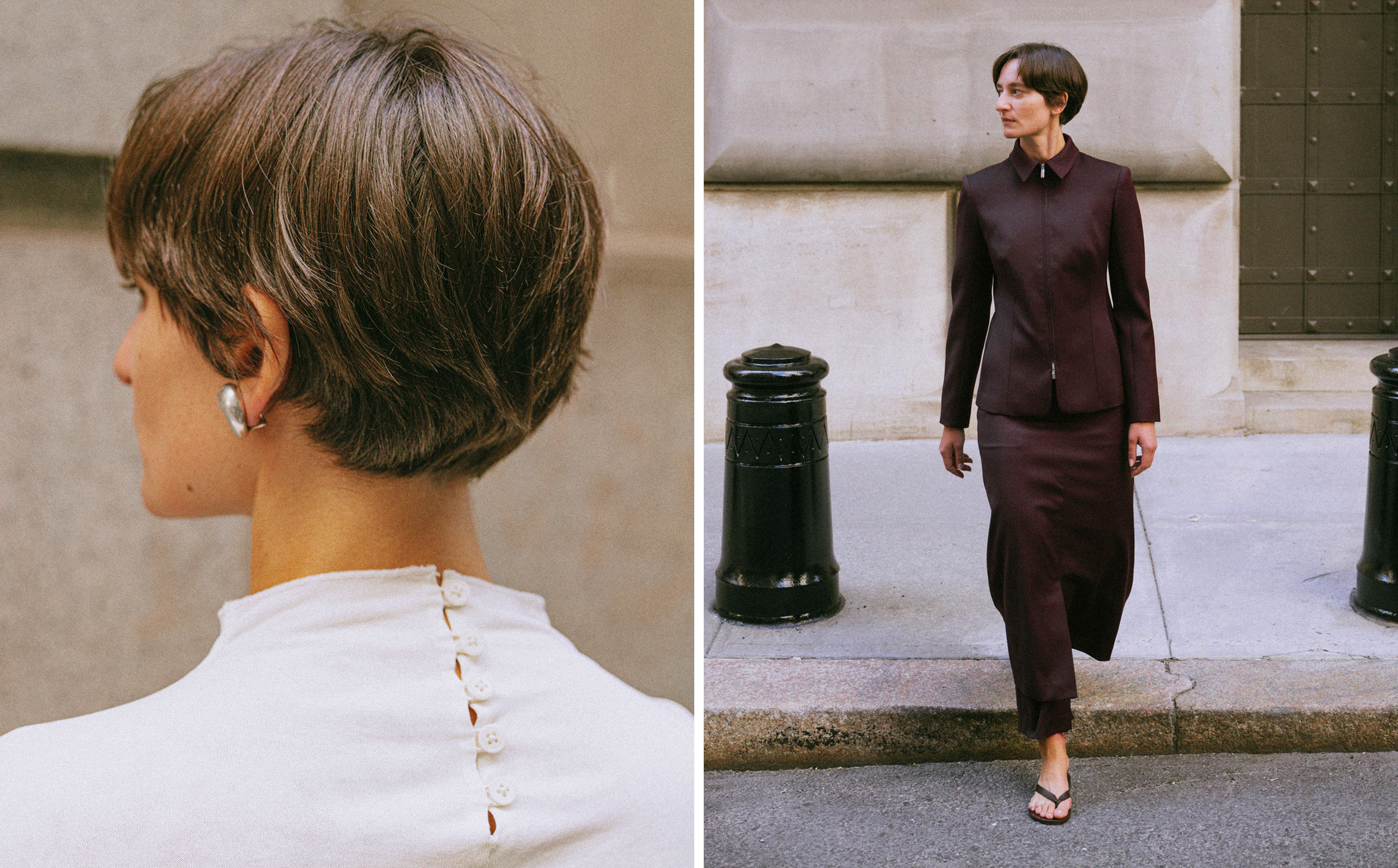
Could you walk us through the moment you realized it was time to transition from your previous path and establish In House as your own studio? What was the catalyst that made you decide to build a brand from the ground up?
When you work in the climate space, it can be incredibly disheartening to watch how solutions are implemented, and how many industries continue to move away from more basic sustainable practices. I honestly reached a point where I kept waiting for someone to start something like In House, and it simply wasn’t happening, so I decided to try it myself. I wanted women to have access to both exciting materials and a reliable source for pieces made from natural fibers.
At the same time, we cannot innovate our way out of overconsumption alone. No material innovation or technological advancement can fully address the issue if we continue to consume clothing at the current pace. So much of this challenge lives in a more nuanced, emotional space — how women dress, what they reach for repeatedly, and how they feel in what they wear. In House is ultimately grounded in the belief that a well-fitting, well-made garment can become indelible to the wearer.
It also became clear to me that there are very strong tailwinds, both within fashion and outside of it, that make sustainability an increasingly difficult proposition for brands. Without broader structural or policy changes, it’s unrealistic to expect incumbents to materially shift course, particularly when they are beholden to certain margin expectations. Building In House felt like an opportunity to approach things differently fromthe ground up.
Your work feels deeply personal and rooted in a specific history. How has your own background and personal journey shaped the visual language and philosophy that you’ve come to define as In House?
Thank you. It is. I don’t think In House could exist in any form other than the one it exists in today. I don’t come from a traditional design background — my academic background is in mathematics and sustainability, and I later worked in venture capital with sustainable material and recycling companies. I can see all of those experiences woven into the brand’s identity.
For example, the interplay between femininity and masculinity within In House, and the way femininity often slightly wins out, reflects my own navigation of more feminine and masculine spaces, and my evolving relationship to femininity. The sense of ease within
these more traditional, sometimes obligation-oriented pieces is similarly reflective of a desire to feel more relaxed and less intense. My intensity is something I often struggle with internally and don’t necessarily identify with, even though it is very innate to me, which I think people can sense through how intentional the brand is.
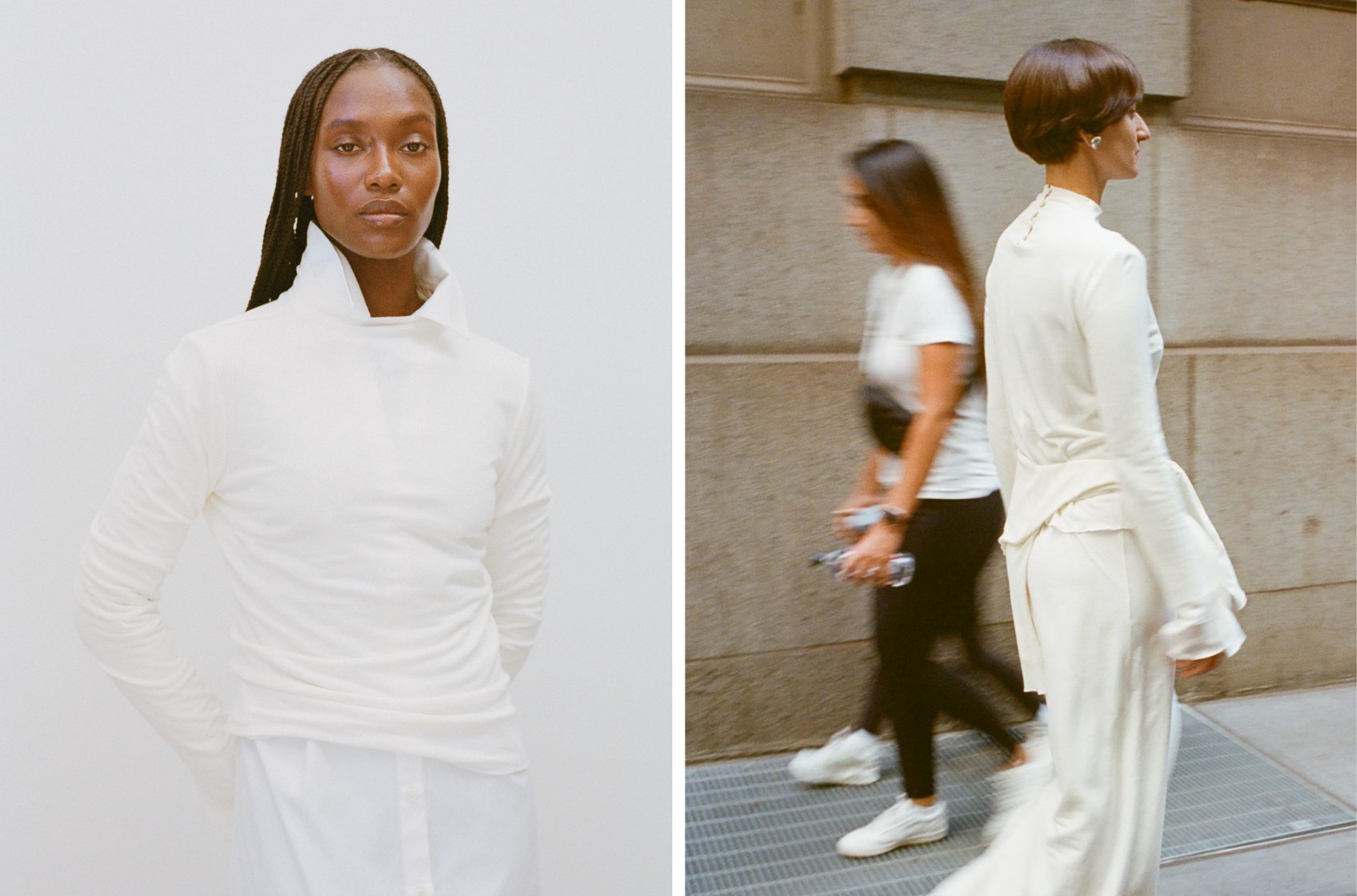
What has surprised me most is how intuitive the design process feels. I come from a very analytical world and still sometimes struggle to articulate ideas through the kind of eloquent language that exists throughout fashion. But the actual process of designing feels incredibly instinctive to me — almost similar to the feeling of studying mathematics or writing proofs in college. There’s the same search for clarity, ease, balance, and inevitability. When something is working, it feels almost obvious in retrospect. I think our pieces are ultimately trying to arrive at that same feeling.
Sustainability is often discussed in broad terms, but for In House, it seems woven into the very DNA of the brand. What specific ethical principles guide your decision-making process, and how do you ensure those values remain intact as the brand grows?
Sustainability informs every decision we make at In House. I would not be making clothing if sustainability were not central to the brand. It shapes the materials we use, the partners we work with, and the pace at which we grow.
We work with both innovative and natural materials, use recycled packaging wherever possible, and partner with manufacturers who have been vetted by people within the industry with very high standards around human welfare and responsible production. We also primarily operate through micro-runs and made-to-order production, which allows us to limit overproduction and be more intentional about what we put into the world.
As the brand grows, production quantities will naturally evolve alongside demand, but sustainability is not something I view as separate from the business. It is foundational to why In House exists at all.
You speak often of your thoughtful material sourcing. Can you share a story about a specific material you’ve discovered or a supplier relationship that has deeply influenced a collection? How do you balance the desire for innovation with the commitment to regenerative practices?
I think innovation only feels meaningful if it can exist within a system that is thoughtful more broadly. We spend a great deal of time looking into the supply chains behind our fabrics — where they come from, how they are produced, who is involved in making them, and whether they can genuinely support the kind of longevity we want from a garment. I’m interested in newness, but not novelty for novelty’s sake. The goal is always to find materials that feel both forward-thinking and deeply wearable.
I don’t really view it as choosing between innovation and more historical regenerative practices. At In House, the two exist in conversation with one another. Some of our fabrics come from centuries-old systems of craftsmanship and agriculture, while others are the result of newer material innovation. What matters to me is whether the material feels aligned with the broader philosophy of the brand — quality, longevity, intentionality, and a respect for the environments and people involved in making it.
Honestly, there is rarely a glamorous story behind how we find our fabrics. A lot of it comes from previous relationships within the sustainability world, spending hours moving between vendors in the garment district, following obscure leads, asking too many questions, and being fairly persistent. I actually really enjoy that part of the process. There is something investigative about tracing a fabric back through its supply chain and understanding how it came to exist in the first place. That curiosity has probably influenced the collections as much as the materials themselves.
In an industry driven by speed and volume, In House embraces a made-to-order and bespoke model. How does this approach fundamentally change the relationship between you, the maker, and the wearer? What does it allow you to achieve that mass production cannot?
In House operates on small manufacturing runs — very small, in some cases — alongside a made-to-order model. At this stage, it allows us to work with higher quality materials and produce more intentionally, responding to actual demand rather than forecasting volume far in advance. We have sold through our wool multiple times and are now on our third or fourth shipment, which, while imperfect at times, feels preferable to overproducing.
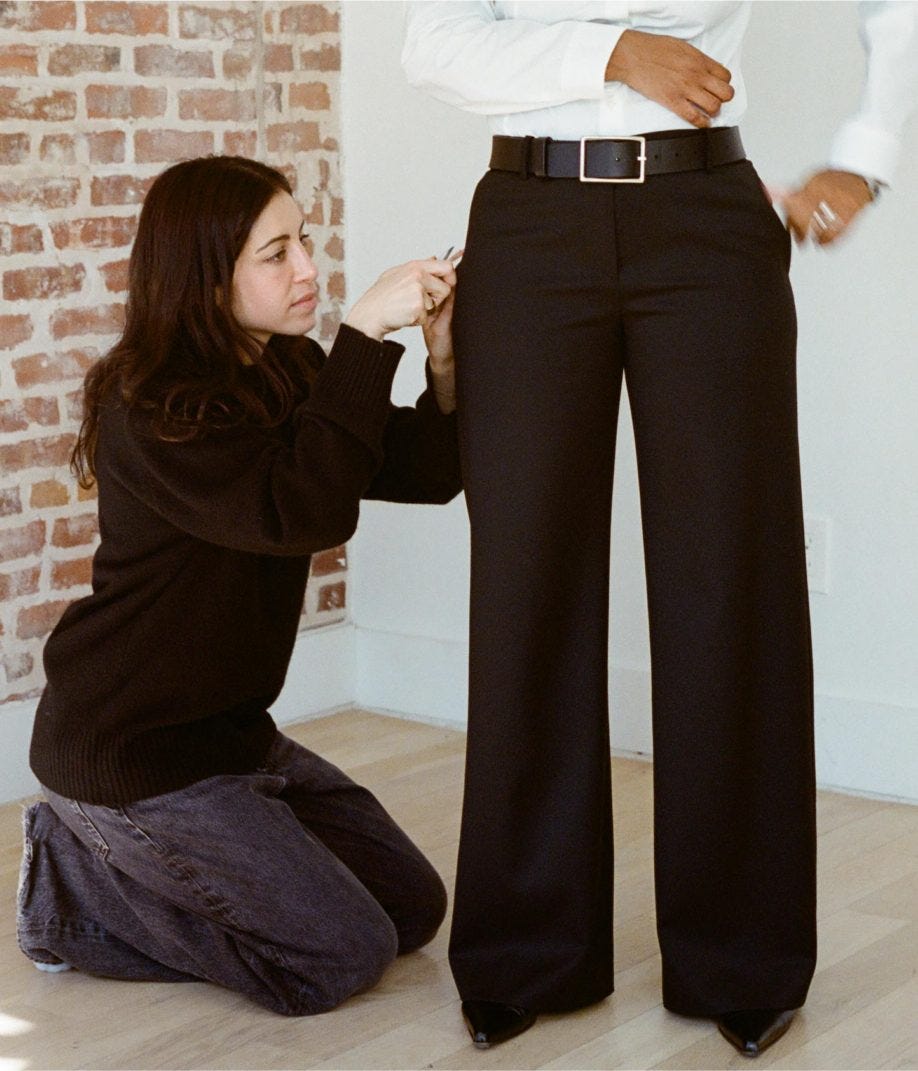
I also think it creates a different relationship between the garment and the wearer. Someone is often willing to wait because they have decided they truly want the piece, not because it simply happened to be available that day. That feels especially meaningful in categories like suiting, where fit, fabrication, and longevity matter so much. Some customers do not want to wait, and we understand that, but building more slowly and with greater restraint feels aligned with how we want the brand to grow.
“Every woman has her own perspective and sense of style, and we want the clothing to support that individuality rather than define it for her.”
Your use of high-quality, innovative, and sustainable materials is striking. Could you describe a moment where you encountered a new material or technology that surprised you, and how you decided to integrate it into your design process?
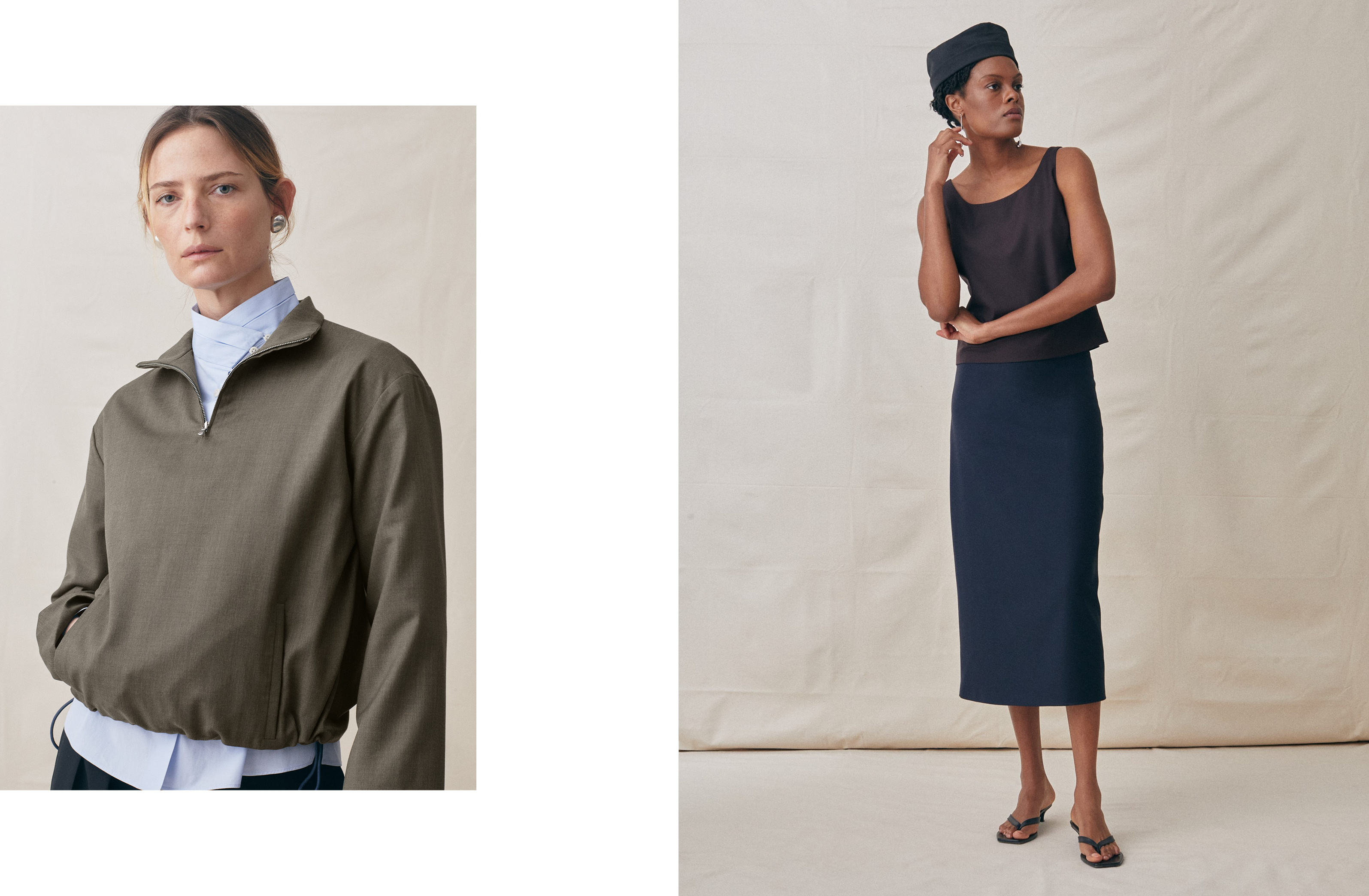
Part of our work, largely because of our material constraints, involves getting creative with how fabrics are used. I think we captured that most clearly with Bananatex. The handfeel of it really surprises people. It comes from the abacá plant, a relative of the banana plant, and exists somewhere between a linen and a cotton. It is light, softens beautifully over time, and still holds a certain structure and durability that makes it incredibly versatile. I’ve had a lot of fun pushing the boundaries of what this linen alternative can be used for within the collection, from floor-length skirts to tanks.
Expert craftsmanship is clearly the heartbeat of your brand. How do you cultivate and maintain this level of skill within your practice, and what role does the human hand play in your definition of true luxury?
Best-in class craftsmanship is fundamental to In House, and a large part of that comes down to choosing the right manufacturing partners and building strong relationships with them over time. While it is of course a business relationship, we think about our manufacturers with the same level of care and respect that we think about the women who wear our clothing. The work is deeply collaborative. It involves trust, problem solving, open communication, and a shared commitment to quality. It often takes more time and effort, but to me, that is part of the job. I think true luxury is felt in those human layers of a garment — the care, skill, and consideration that shape it long before it reaches the wearer.
Every piece seems to carry a sense of quiet intention. How do you approach the design phase? Is it driven by a specific emotion, a memory, or perhaps a response to the material itself?
Every garment begins with the fabric. We spend a lot of time understanding where it comes from, how it was made, and the history behind it. The material itself actually often guides the emotional direction of the piece. From there, the design process becomes a response to that story translating texture, origin, and feeling into something wearable!
As the conversation around slow fashion continues to evolve, where do you see In House fitting in the broader landscape in the next few years? Are there new horizons you’re hoping to explore?
I think the conversation around slow fashion is becoming far more nuanced, which is exciting to us. We don’t see In House as a brand that has all the answers yet, but rather one that wants to actively participate in shaping what the future of thoughtful consumption can look like.
Over the next few years, I hope to deepen our presence within that space through continued research, collaboration, and listening – both to the people making the materials and to the community wearing the clothes. We’re interested in connecting with innovators across design, craft, and sustainability, and continuing to explore how clothing can feel emotionally lasting as much as physically lasting.
For us, growth isn’t really necessarily about scale alone, but about building something with integrity that can evolve alongside the conversation itself.
“There is something investigative about tracing a fabric back through its supply chain and understanding how it came to exist in the first place. That curiosity has probably influenced the collections as much as the materials themselves.”
Finally, as you look toward what’s next for In House, what is the one thing you hope people feel or take away from your work that goes beyond the physical garment itself?
We hope women feel a better sense of ease in their everyday lives. We want getting dressed to feel expressive, but never overwhelming or performative.
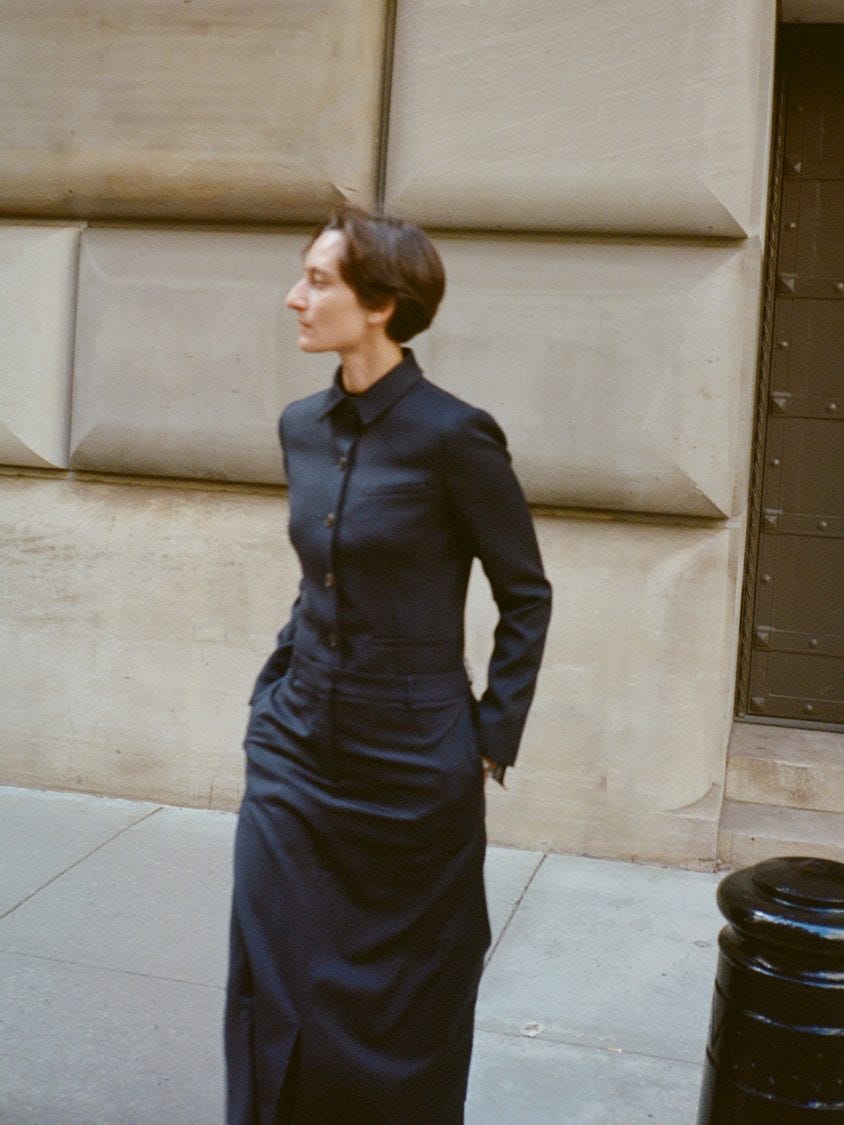
Beyond the physical garment itself, we hope In House gives women a feeling of quiet confidence! I want our pieces to move with them, adapt to their lives, and become part of their personal rhythm over time. Every woman has her own perspective and sense of style, and we want the clothing to support that individuality rather than define it for her.
In House offers limited runs and made-to-order from the highest quality innovative, sustainable, and regenerative materials.
For more information about In House, visit their website.
Follow on instagram @inhousestudio_
–
Interview published for ONE Magazine Online